What are the key elements of a standout bar tender resume?
A standout bar tender resume prominently features a compelling professional summary, a detailed work history with quantifiable achievements, a robust skills section encompassing both technical mixology and soft customer service abilities, and any relevant certifications. Tailoring content to each specific bar is paramount for a professional bartending resume.How do I make my bar tender resume appealing to local US bars?
To appeal to local US bars, research the venue's specific style and clientele. Highlight skills and experiences that align with their needs, whether it is craft cocktail skills for a high-end lounge or high-volume service for a sports bar. Include responsible alcohol service certifications like TIPS or ServSafe, which are often state-mandated.Should I include a cover letter with my bar tender resume?
Yes, always include a well-crafted cover letter with your bar tender resume. It is your opportunity to express genuine interest in the specific bar, expand on key skills, and show your personality. A personalized cover letter significantly strengthens your bartending job application and makes a memorable impression on hiring managers.What if I lack direct bartending experience for my resume?
If you lack direct bartending experience, focus your resume on transferable skills from customer service, retail, or hospitality roles. Emphasize abilities like cash handling, problem-solving, customer interaction, and multitasking. Highlight any related training, such as a bartending school certificate, to demonstrate your commitment and foundational knowledge.What certifications are important for a bar tender resume in the US?
In the US, responsible alcohol service certifications like TIPS or ServSafe Alcohol are highly important and often required by law or employers. These demonstrate knowledge of safe serving practices. Any mixology courses or specialized training in spirits or wine can also significantly enhance your bar tender resume, showcasing advanced craft cocktail skills.bar tender resume, bartending job application, hospitality experience resume, craft cocktail skills resume, resume templates for bartenders, bar manager resume tips, professional bartending resume, local bartender jobs, how to get a bartending job, bar interview tips
Crafting a compelling bar tender resume is your golden ticket to landing top hospitality jobs across the United States. This guide cuts through the clutter, showing you exactly what bar managers seek: real-world experience, a flair for craft cocktail skills, and a polished presentation. Discover how to highlight your unique abilities, from mixing classic drinks to managing a busy bar with a smile. We cover essential sections like contact info, a strong professional summary, detailed work history, crucial skills, and any relevant certifications. Learn where to find professional resume templates for bartenders and how to tailor your application for local venues. Understanding these requirements empowers you to create a document that truly shines, making you an undeniable candidate for that dream bartending role. Local guide users searching for "how to make a bar tender resume" will find actionable steps and expert advice to get hired faster, ensuring their next career move is a successful one in the vibrant US hospitality scene.
Are you ready to shake things up in your career? Crafting an exceptional bar tender resume is the first critical step to pouring your way into the best hospitality gigs across the United States. It is not just about listing where you have worked; it is about showcasing your unique blend of skills, experience, and personality that makes you indispensable behind the bar. A truly effective resume will open doors, helping you land those coveted interviews at bustling city hotspots, cozy neighborhood pubs, or high-end cocktail lounges.
Many aspiring and experienced bartenders often hit a snag when trying to translate their dynamic, fast-paced work into a static document. They wonder, how do I make my bartending job application stand out? What do hiring managers really care about? This guide cuts through the noise, offering clear, actionable strategies to construct a bar tender resume that grabs attention and secures your next pour.
The Core Problem: Why Most Bar Tender Resumes Fall Flat
It is tough out there. The hospitality industry, especially bartending, is incredibly competitive. Many applicants make common mistakes that cause their bar tender resume to get overlooked. Often, resumes are generic, failing to highlight specific, valuable skills or demonstrate a genuine understanding of the role. Think about it: a bar manager might review dozens of applications for a single opening. If your resume does not immediately convey your worth, it is quickly sidelined.
One major pitfall is a lack of quantifiable achievements. Instead of simply saying, “Served customers,” a winning resume will say, “Boosted bar sales by 15% through upselling craft cocktails and specialty drinks.” Another common issue? Disorganized layouts or too much jargon without context. Remember, the person reviewing your resume is busy. They need to see your qualifications clearly and concisely. A cluttered or confusing document is a surefire way to lose their interest fast, impacting your chances at a great bartending job application.
Beyond that, many applicants forget the importance of tailoring. Sending the same resume to every bar is like trying to make every drink with the same two ingredients—it just does not work. Each establishment has its own vibe and needs. A high-volume sports bar demands different skills and emphasizes different experiences than an intimate speakeasy focused on craft cocktail skills. Understanding this nuance and adjusting your resume accordingly is crucial. Generic approaches rarely lead to great opportunities.
How to Build a Winning Bar Tender Resume: Your Step-by-Step Playbook
Creating a stellar bar tender resume means more than just listing past jobs. It is about telling your story effectively, showcasing your unique abilities, and proving you are the perfect fit for the role. Here is a breakdown of how to construct a document that gets noticed.
Crafting a Magnetic Professional Summary
Your professional summary is your elevator pitch. It is the first thing a hiring manager sees, so make it count. This short paragraph, typically 3-4 sentences, should immediately highlight your most impressive qualifications, relevant experience, and career aspirations. Think of it as your signature drink: unique, memorable, and perfectly balanced. For a professional bartending resume, focus on your years of experience, key strengths like customer service or mixology, and what you bring to the table.
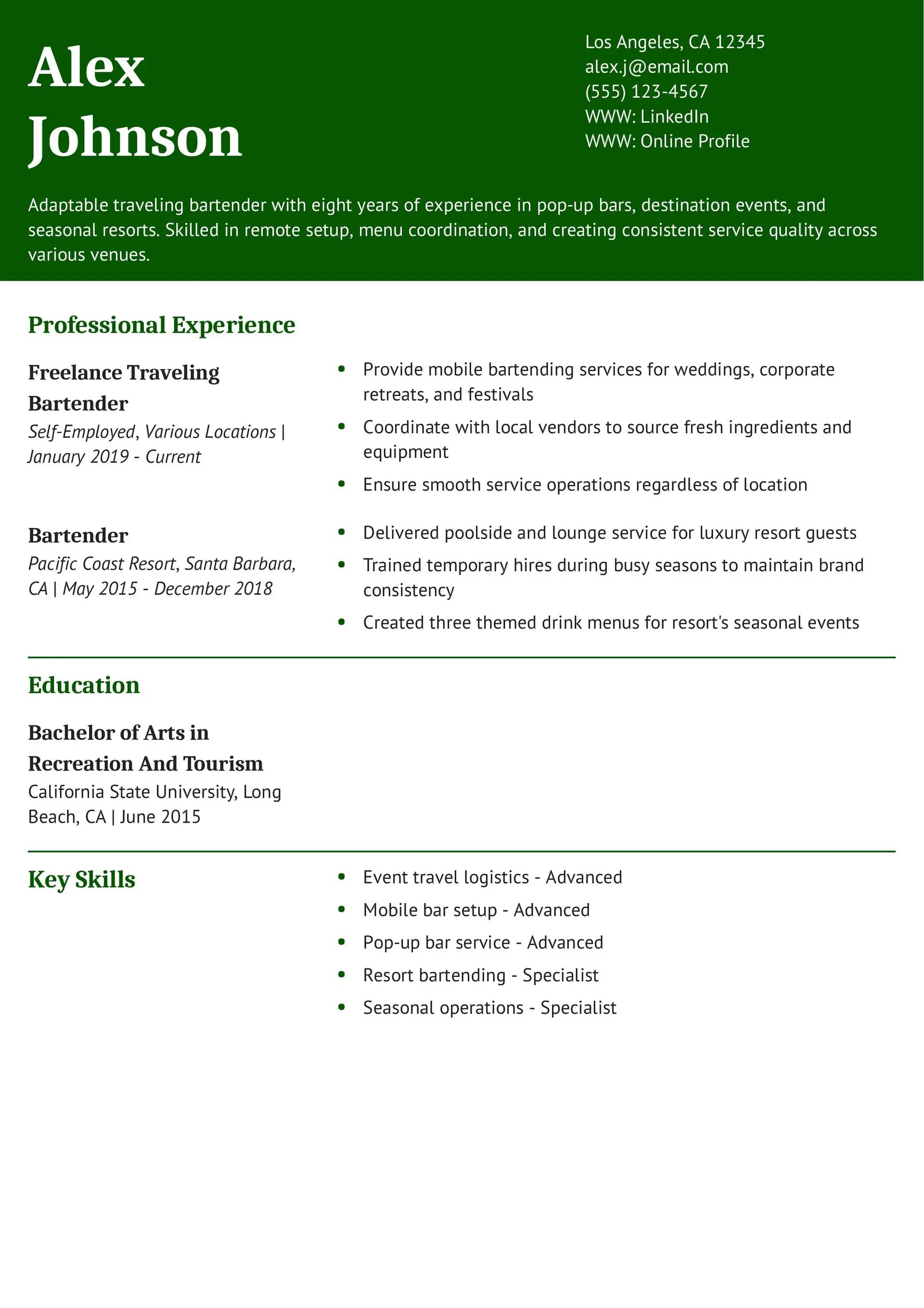
For instance, instead of a bland objective, try something like: “Dynamic and experienced bartender with 7+ years delivering exceptional service in high-volume settings. Proven ability to craft innovative cocktails, manage inventory, and drive customer loyalty, resulting in increased revenue. Seeking to leverage strong interpersonal and leadership skills to contribute to a thriving bar environment.” This summary quickly communicates value and sets the tone for the rest of your bar tender resume.
Always tailor this summary to the specific job description. If the bar emphasizes live music and a vibrant atmosphere, mention your experience with similar venues. If they pride themselves on their extensive wine list, hint at your knowledge of wine pairings. This personalized touch shows you did your homework and are genuinely interested in *their* specific opportunity, making your bartending job application more impactful.
Showcasing Your Work History with Impact
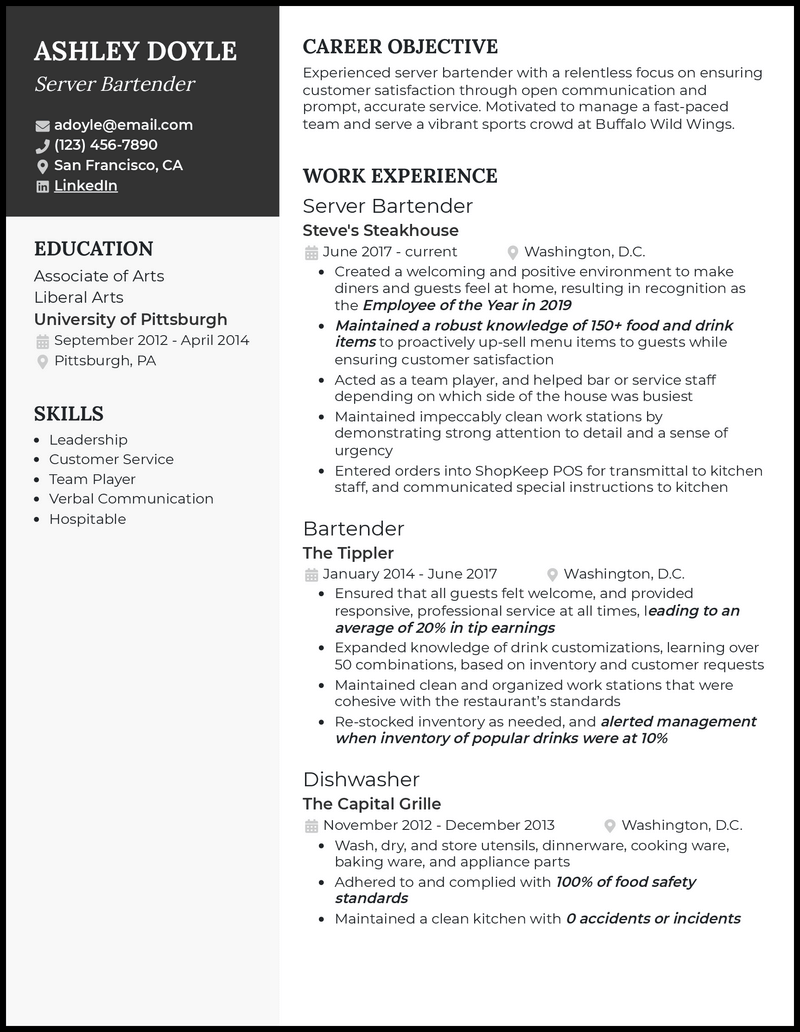
This section is the heart of your bar tender resume. List your previous roles in reverse chronological order, starting with your most recent position. For each role, include the bar or restaurant name, location, your job title, and the dates of employment. Do not just list duties; focus on accomplishments. Use strong action verbs to describe your responsibilities and achievements.
- Managed a busy bar section, consistently exceeding sales targets.
- Trained new staff on proper mixology techniques and customer service protocols.
- Developed a seasonal cocktail menu that increased beverage sales by 20%.
- Maintained accurate inventory and managed orders, reducing waste by 10%.
- Provided exceptional guest experiences, resulting in numerous positive online reviews.
Quantify your achievements whenever possible. Numbers speak volumes. Did you handle a certain number of guests per shift? Did your specials increase revenue? Did you implement a new system that improved efficiency? These details provide concrete evidence of your capabilities. Even if you are putting together a resume with limited hospitality experience, focus on transferable skills from other customer-facing roles, such as sales or retail, and highlight instances where you handled money, managed inventory, or dealt with demanding customers.
Highlighting Essential Bar Tender Skills
The skills section is where you demonstrate your technical prowess and soft skills crucial for success behind the bar. Separate your skills into categories like Technical Skills and Soft Skills for clarity. This makes it easy for hiring managers to quickly identify if you possess the specific craft cocktail skills or operational expertise they need.
Technical Skills:
- Mixology (classic and contemporary cocktails)
- Wine and Beer Knowledge (pairing, pouring, varietals)
- POS Systems (e.g., Toast, Square, Aloha)
- Inventory Management
- Cash Handling and Reconciliation
- Sanitation and Safety Protocols
- Flair Bartending (if applicable)
- Food Preparation (light bites, garnishes)
Soft Skills:
- Exceptional Customer Service
- Communication
- Teamwork and Collaboration
- Problem-Solving
- Stress Management
- Adaptability
- Sales and Upselling
- Multitasking
For each skill listed, consider how you can back it up with an example from your work history. For instance, if you list “Problem-Solving,” you might have a bullet point under a past job about resolving a customer complaint professionally. This connection validates your claims and strengthens your overall bar tender resume. Do not just list keywords; show how you apply them.
Education and Certifications
While a specific degree is not always required for bartending, relevant education and certifications can significantly boost your bar tender resume. List any high school diplomas, GEDs, or college degrees. More importantly, include any bartending school certifications, responsible alcohol service training (like TIPS or ServSafe Alcohol in the US), or specialized mixology courses. These demonstrate professionalism and a commitment to the craft.
For example, in many states, having a valid Responsible Alcohol Service certification is mandatory. Highlighting this upfront tells employers you are ready to hit the ground running and understand the legalities of serving alcohol. If you have any advanced certifications in wine knowledge (like a Sommelier certification) or spirits, definitely include those. They signal a higher level of expertise and dedication to craft cocktail skills.
Comparing Resume Approaches for Bartenders
Choosing the right resume format can make a huge difference. Here is a quick comparison of common approaches for your professional bartending resume:
| Resume Type | Best For | Pros | Cons |
|---|---|---|---|
| Chronological | Experienced bartenders with stable work history. | Easy to read, highlights career progression. | Gaps in employment are noticeable; less suitable for career changers. |
| Functional | New bartenders, career changers, or those with employment gaps. | Emphasizes skills over work history. | Can look like you are hiding something; less common in hospitality. |
| Combination | Most versatile; combines skills and chronological history. | Highlights both skills and experience; strong impact. | Can be longer; requires careful organization. |
For most experienced bartenders, a combination resume is often the sweet spot. It allows you to prominently feature your impressive skill set, including craft cocktail skills and customer service prowess, right at the top, while still providing a clear, chronological history of your roles. If you are new to the scene, or just starting to build your hospitality experience, a functional or combination approach tailored to emphasize your transferable skills will serve you well.
The Future Outlook: Common Pitfalls to Sidestep
Even with a strong bar tender resume, some mistakes can hinder your job search. One classic misstep is overlooking the cover letter. A well-written cover letter is not just a formality; it is your chance to expand on your resume, explain your passion for the industry, and explicitly state why you are a perfect fit for *that* specific bar. Mention the bar by name and articulate why you are drawn to their particular style or ethos. This shows genuine interest beyond a simple bartending job application.
Another area where people stumble is failing to proofread. Typos and grammatical errors are instant red flags for employers. They suggest a lack of attention to detail, which is a major no-no in a role where precision matters. Always have a trusted friend review your professional bartending resume before sending it out. Better yet, read it aloud; you will often catch awkward phrasing or errors you missed visually.
Finally, do not underestimate the power of networking. While a solid resume is crucial, knowing people in the industry can give you a significant leg up. Attend local hospitality events, follow local bars on social media, and engage with professionals. Sometimes, the best opportunities come from word-of-mouth rather than a standard online application. Always keep your resume updated and ready, but remember it is just one piece of the puzzle. The bar manager resume tips you pick up from seasoned pros can often be gold. Staying current on industry trends and cocktail innovations also keeps your skills sharp and attractive to employers.
FAQs About Crafting Your Bar Tender Resume
What should a bar tender resume include?
A strong bar tender resume should include a professional summary, detailed work history with action verbs and quantifiable achievements, a comprehensive skills section highlighting both technical (like mixology, POS systems) and soft skills (customer service, teamwork), and any relevant education or certifications such as TIPS or ServSafe. Always tailor it to the specific job to stand out.
How long should a bar tender resume be?
For most bartending roles, a one-page resume is ideal, especially for those with less than 10 years of experience. Hiring managers often skim applications quickly, so brevity and impact are key. If you have extensive, highly relevant experience or are applying for a management role, a well-organized two-page resume might be acceptable, but keep it concise.
Should I include a photo on my bar tender resume?
In the United States, it is generally advised *not* to include a photo on your resume due to anti-discrimination laws. Focus on your skills and experience rather than your appearance. While some international resumes might include photos, sticking to text-based information is the professional standard for a bartending job application in the US.
What if I have no bartending experience?
If you have no direct bartending experience, focus on transferable skills from other customer service, retail, or hospitality roles. Highlight cash handling, problem-solving, customer interaction, multitasking, and any relevant training (like a bartending school certificate or responsible alcohol service). Emphasize your passion for the industry and eagerness to learn on your bar tender resume.
Is a bartending certification necessary for my resume?
While not always strictly required, a bartending certification (especially responsible alcohol service like TIPS or ServSafe) significantly enhances your bar tender resume. It demonstrates professionalism, commitment, and knowledge of legal responsibilities, making you a more attractive candidate to potential employers. Some states or venues may even mandate such certifications.
How do I make my bar tender resume stand out?
To make your bar tender resume stand out, use strong action verbs, quantify your achievements (e.g., "increased sales by 15%"), tailor your resume to each specific job description, and highlight unique skills like craft cocktail creation or specific POS system expertise. A clean, easy-to-read format and a compelling professional summary are also crucial for a memorable bartending job application.
Conclusion: Pour Your Way to Success
Creating an outstanding bar tender resume is more than just a formality; it is your strategic tool to unlock exciting opportunities in the US hospitality industry. By focusing on a clear, accomplishments-driven format, highlighting your unique craft cocktail skills, and tailoring your application to each specific bar, you position yourself as a top-tier candidate. Remember, your resume is often the first impression a potential employer gets, so make it count.
Do not let common pitfalls like generic descriptions or unchecked typos hold you back. Take the time to polish every section, from your compelling professional summary to your detailed work history and skill set. Think about what a bar manager truly seeks: a reliable, skilled, and charismatic individual who can elevate their establishment. Your bar tender resume should reflect all these qualities, making their decision to call you for an interview an easy one.
Now that you have the playbook, it is time to put these strategies into action. Review your current resume, identify areas for improvement, and start customizing it for the roles you are truly passionate about. Many online resources offer resume templates for bartenders, which can be a great starting point if you need structural guidance. With a well-crafted professional bartending resume, you are not just applying for a job; you are making a strong case for your place behind the bar, ready to deliver exceptional experiences and become an invaluable asset to your next team. Cheers to your next career move!
Key Highlights
how to create bar tender resume, bar tender resume requirements, best bar tender resume examples, bar tender resume near me, cost to professionally write a bar tender resume, what to expect on a bar tender resume, bar tender resume tips, maps directions for resume help